
Imagine waking up to news that your country has “defaulted.” At first glance, it sounds like corporate bankruptcy. But when a nation fails to meet its debt obligations, the consequences are far more complex and devastating. Sovereign defaults don’t just affect governments; they ripple through economies, businesses, and ordinary lives. Let’s break down what really happens when a country can’t pay its bills.
What Is a Sovereign Default?
Governments borrow money just like individuals and companies do. They issue bonds, take loans from global institutions, or borrow from foreign investors. In return, they promise to pay interest and repay the principal on time.
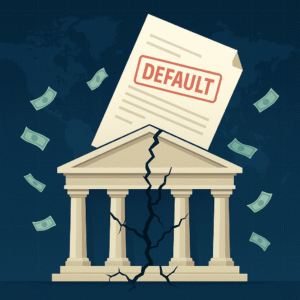
A sovereign default occurs when a country cannot honour its commitment. Unlike businesses, countries cannot be liquidated or sold off. Instead, they face a loss of trust, limited access to capital markets, and painful economic restructuring.
The Immediate Fallout
The first impact of default is a sharp decline in confidence. Investors quickly pull out, and foreign capital stops flowing into the country. This sets off a chain reaction:
- Currency Collapse: The national currency plummets amid investor selling, raising import costs.
- Inflation Surge: Essential goods like oil, medicine, and food skyrocket in price.
- Credit Freeze: The government struggles to raise new funds, forcing it to cut spending or print money.
For ordinary people, these financial tremors translate into soaring prices, job losses, and uncertainty.
How Citizens Are Affected
Citizens feel the most severe impact of a sovereign default. Inflation erodes purchasing power, meaning groceries, fuel, and daily essentials suddenly cost much more. Jobs vanish as companies cut expenses or shut down entirely. Savings lose value, devastating the middle class that worked for decades to build financial security.
In extreme cases, defaults cause shortages of food, fuel, and medicines, leading to humanitarian crises. Sri Lanka’s 2022 default, for example, left citizens facing days-long fuel queues and empty supermarket shelves.
The Global Domino Effect
A sovereign default rarely remains confined within a nation’s borders. Because today’s global economy is deeply interconnected, defaults can trigger ripple effects worldwide.
- Investor Panic: Investors often flee not just the troubled nation but also other emerging markets.
- Banking Losses: Global banks and institutions holding the defaulted bonds take heavy hits.
- Trade Disruptions: Exporters and trading partners lose income as deals collapse.
The Greek debt crisis of 2015, for instance, threatened the stability of the entire Eurozone. Argentina’s multiple defaults have shaken investor confidence in Latin America for decades.
Why Do Countries Default?
Defaults rarely happen overnight; they are often the result of years of mismanagement or external shocks. Common causes include:
- Excessive Government Spending: Large welfare schemes, subsidies, or war expenses strain budgets.
- Low Tax Revenues: Weak tax systems mean governments cannot generate enough income to cover expenses.
- Debt Spiral: Borrowing more money just to repay old loans leads to unsustainable debt levels.
The IMF Lifeline
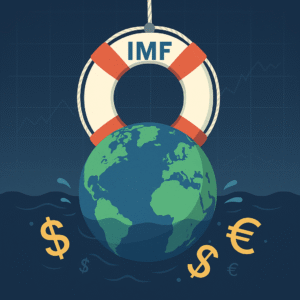
When a country defaults, the International Monetary Fund (IMF) often steps in as the “lender of last resort.” The IMF provides emergency loans, but these come with strict conditions:
- Cutting subsidies
- Raising taxes
- Reducing government spending
- Restructuring industries
These measures, known as austerity reforms, aim to stabilize finances. But they often bring years of hardship before recovery begins. Citizens bear the brunt of higher prices, reduced government services, and unemployment.
Can Countries Recover?
The good news is that default is not the end of the road. Many nations have managed to restructure debt and regain stability. For instance, after defaulting in 2012, Greece gradually re-entered capital markets by adopting strict reforms, though recovery took years. Argentina, despite multiple defaults, still attracts investors due to its natural resources.
Recovery depends on how quickly a nation can restore investor trust, stabilize its currency, and build sustainable fiscal policies.
The Bigger Picture
A sovereign default is more than a financial hiccup; it’s a breakdown of trust between a nation and the world. It reshapes lives at home and rattles markets abroad. While governments negotiate with creditors, it’s ordinary citizens who pay the highest price.
For investors and citizens alike, understanding the risks of sovereign default is crucial. It reminds us that in global finance, no player, no matter how big, is immune to the consequences of debt.
Final Takeaway
When a country defaults, the results are devastating: collapsing currencies, spiralling inflation, and a long road to recovery. But defaults also serve as a reminder of the importance of responsible borrowing, transparent governance, and sustainable economic policies.
In the end, a sovereign default teaches us that money isn’t just about numbers on a balance sheet—it’s about the lives of millions who depend on economic stability.
Contributor: Team Leveraged Growth


