
When most people think of Nike, they picture sleek sneakers, iconic Air Jordans, or world-class athletes sprinting across billboards. And while shoes are at the core of Nike’s story, they aren’t the real profit engine driving the company’s empire. In fact, Nike’s biggest strength lies in something far less tangible but far more powerful, its brand.
Let’s unpack how Nike turned a simple swoosh into a global money machine.
The Myth: Nike = Sneakers
It’s easy to assume Nike is all about shoes. After all, the company sells over a billion pairs each year, making it the world’s largest athletic footwear brand. Sneakers fuel massive revenues, accounting for the majority of Nike’s $50B+ in annual sales.
But here’s the twist: sales volume doesn’t always mean fat profit margins. Sneakers are expensive to produce, market, and distribute. For every pair sold, Nike shoulders costs like research and development, athlete endorsements, raw materials, manufacturing, logistics, and retail operations. By the time discounts and promotions kick in, the margins have already shrunk.
So, where does Nike really make its money?
The Reality: Brand > Product
Nike’s real power lies not in the products themselves, but in the brand – the swoosh. One of the most recognizable logos in the world, it’s valued at over $37 billion on its own. This brand value enables Nike to generate profits through high-margin streams, such as licensing.
The Secret Sauce: Licensing the Swoosh
Licensing is Nike’s hidden goldmine. Here’s how it works:
- Nike owns the brand and the swoosh logo.
- Other companies (licensees) pay Nike royalties to put that logo on jerseys, caps, bags, and accessories.
- Nike doesn’t carry the burden of production, distribution, or retail for these licensed products.
The result? Minimal costs, maximum margins. Every jersey you buy with a swoosh, every cap in a stadium, every team kit earns Nike money without the heavy operational baggage tied to sneakers.
In fact, licensing deals with major sports leagues (NBA, NFL, FIFA) have made Nike an integral part of global sports culture. A fan buying a $100 basketball jersey doesn’t just support their favourite player; they also contribute directly to Nike’s brand royalty stream.
Why Shoes Don’t Always Shine
Nike is, of course, still a footwear powerhouse, but the shoe business comes with significant challenges:
- High R&D Costs: Developing cutting-edge designs like Flyknit or Air soles requires years of research.
- Endorsements: Signing global athletes such as LeBron James or Cristiano Ronaldo costs hundreds of millions.
- Complex Supply Chains: Manufacturing in multiple countries, shipping globally, and managing retail presence add heavy logistics expenses.
- Discounting: Seasonal clearances and price competition eat into profits.
In short, shoes keep the revenue wheel spinning, but they don’t consistently deliver the richest profits. Licensing, by comparison, is leaner, cleaner, and far more scalable.

The Brand Power Play
Nike’s brand isn’t just strong, it’s cultural currency. The swoosh isn’t just a logo; it’s a statement of identity, aspiration, and performance. This gives Nike leverage far beyond product sales.
- Brand Value: Ranked consistently among the top 20 most valuable brands in the world.
- Premium Pricing: Consumers are willing to pay more for the swoosh, even when similar alternatives exist.
- Partnerships: Teams, leagues, and athletes pay a premium to be associated with Nike.
- Cultural Influence: From hip-hop to high fashion, the swoosh has transcended sports to become a lifestyle icon.
This intangible brand power is what enables Nike to monetize beyond the shoe rack, fueling long-term growth.
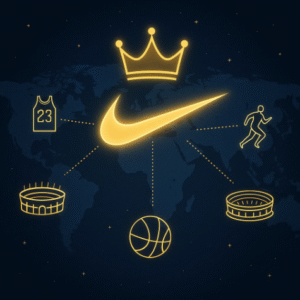
Case Study: The NBA Deal
One shining example of Nike’s brand monetization is its deal with the NBA. In 2015, Nike secured an 8-year agreement to become the official uniform supplier, starting in 2017. The deal was reportedly worth $1 billion.
For Nike, the upside wasn’t just the uniforms – it was visibility. Every NBA game, watched by millions globally, features the swoosh. Jerseys, merchandise, and related apparel sales drive royalties, reinforcing the brand’s dominance. It’s an elegant loop: Nike pays for exposure and then earns multiple times that investment back through royalties and sales.
Lessons for Businesses
Nike’s success offers a masterclass in business strategy:
- Build the Brand First: Products can change, but a strong brand is timeless.
- Leverage Licensing: High-margin royalty streams can be more profitable than core products.
- Diversify Revenue Streams: Don’t rely solely on one product line; expand into lifestyle and culture.
- Turn Intangibles into Tangibles: A logo, when nurtured, can be worth billions.
The Bigger Picture
Nike’s story demonstrates how intangible assets such as logos, brand identity, and cultural relevance can surpass the value of physical products. While shoes might be the entry point, it’s the brand that builds empires.
In today’s economy, where consumers pay for trust, aspiration, and community, Nike proves that branding isn’t just marketing, it’s the business model.
Conclusion
Nike may have started as a sneaker company, but today, it’s a branding powerhouse. The swoosh has evolved from a simple checkmark into a money-making machine, one that generates billions through licensing, partnerships, and cultural dominance.
So the next time you see someone sporting a Nike cap or jersey, remember: it’s not just about the product. It’s about the brand and the brilliant business model behind it.
Nike turned a logo into an empire. And that’s the real secret behind its fortune.
Contributor: Team Leveraged Growth


