On October 1, 2025, the United States federal government halted operations after Congress failed to pass the necessary funding legislation for the new fiscal year. Millions of public services paused, and around 1.5 million federal employees faced uncertain futures as they were either furloughed or required to work without pay. National parks closed, passport offices slowed, and small businesses near government centers felt the immediate impact. What started as a political impasse quickly became a growing crisis felt across the nation and around the world.
Inside the Deadly Budget Battle
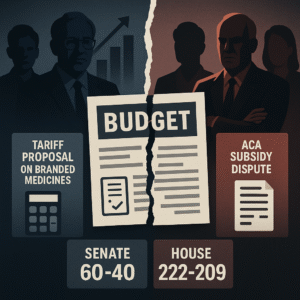
The shutdown stemmed from deep ideological conflicts about how America should manage its finances and social programs. Fiscal conservatives pushed aggressively for steep spending cuts and included controversial proposals, such as doubling tariffs on branded medicines. Democrats opposed drastic cuts to health care subsidies and welfare programs, particularly those under the Affordable Care Act. This deadlock over priorities created an impasse that Congress was unable to overcome before the funding deadline. The battle was not only about budget numbers but about visions for the country’s economic and social future.
Billions Lost and Millions Left Without Pay
The consequences unfolded rapidly. The Congressional Budget Office estimated that the shutdown reduced annual U.S. economic growth by 0.8 percent, amounting to $11 billion in lost output. Nearly 670,000 federal employees were furloughed, while roughly 730,000 others continued to work but without immediate compensation. Social programs suffered dramatically. An estimated 42 million Americans on the Supplemental Nutrition Assistance Program lost access to their benefits, impacting many of the nation’s most vulnerable citizens. The travel sector faced turmoil as thousands of flights were delayed or canceled due to understaffed air traffic control.
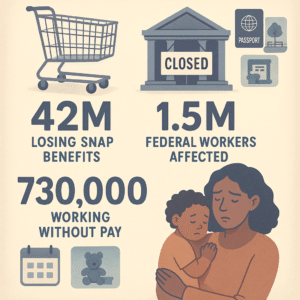
The shutdown also led to widespread job losses outside of federal employment, with approximately 60,000 jobs in other sectors disappearing due to reduced government spending. Consumer confidence has sunk to its lowest point since the inflation-driven hardship of the pandemic in 2022. Moreover, two vital monthly jobs reports went unreported, leaving policymakers and markets in the dark about the real-time economic situation amid growing uncertainty.
A Temporary Truce After 43 Days
After nearly six weeks of deadlock, the government finally reopened on November 12 when Congress passed a short-term funding bill to restore operations through January 2026. The Senate’s 60-40 vote reflected rare bipartisan cooperation, with several Democrats crossing party lines. The House followed with a narrow 222 to 209 vote. President Donald Trump promptly signed the bill, officially ending what had become the longest government shutdown in U.S. history at 43 days.
The deal included guarantees for retroactive pay to federal workers and prevented mass layoffs during the temporary funding period. However, the plan deferred resolution of the contentious health insurance subsidy issue, leaving the possibility of future fiscal confrontations. The temporary reopening was a pause, not an end, to the deep political rifts that sparked this crisis.
What the Shutdown Revealed
This government shutdown highlighted the significant challenges facing the nation’s political and economic system. While the government resumed operations, the disruptions left lasting scars: billions in lost economic output, interrupted social services, delayed scientific research, and weakened public trust in governance. For millions of federal workers, contractors, and vulnerable Americans, the shutdown was not just a political fight, but a period of real hardship.
Globally, investors responded with caution as funds migrated back into perceived safe assets like U.S. Treasuries and the dollar, causing strain in emerging markets, including India. The government’s inability to maintain continuous funding raised concerns about the political stability of the world’s largest economy and its implications for global markets.
As the country moves forward, the 2025 shutdown serves as a stark reminder of the cost of political gridlock. The temporary solution may have restored functions for now, but the underlying fiscal and ideological conflicts continue to challenge lawmakers. Americans and the world will be watching closely to see whether future administrations can find lasting compromises to prevent a repeat of this economically and socially painful episode.
Contributor: Team Leveraged Growth


